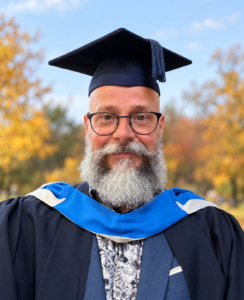
Max Dalda Müller MA, MBACP, PGDip (Couns), PGDipEd, QTLS.
BACKGROUND
As a teenager, I struggled to cope with changes in myself and the world around me. I became anxious and eventually depressed. I dropped out of school and, for much of my early adult life, felt inadequate and worthless.
I left Spain, where I grew up, and travelled around Europe, living in Germany and Sweden before eventually settling in London. Wherever I went, though, my difficulties came with me. They affected my relationships, everyday life and ability to hold down a job. I found myself in damaging relationships and used alcohol and drugs to cope, developing dependencies. Eventually, I became homeless on the streets of North London, isolated and struggling to survive.
Then, one night in February 2007, something happened that changed my life. A Police Community Support Officer, Michael Owusu, stopped and listened to my story. He connected me with an outreach worker from the Pillion Trust, who helped me off the streets and into a rehabilitation programme.
Rehabilitation was painful and difficult, but also rewarding and full of possibility. Central to it was the relationship I developed with my counsellor. For the first time in my life, I felt heard and understood without conditions or judgement. That experience inspired me to train as a counsellor after completing treatment. I wanted to offer others what had made such a difference to me.
I was given an opportunity to turn my life around, and many people worked hard to help me reach that point. I believe that we can only keep what we have if we give it away.
My experiences continue to shape how I work. I know how much kindness, warmth and being heard can mean when life feels overwhelming. I believe everyone has the capacity to grow when given the chance. My aim is to offer an accepting, empathic and genuine relationship in which you can explore your difficulties, recognise your strengths and find your own way forward.
EXPERIENCE
I have been in practice since 2010 and qualified as a counsellor in 2011. I am a registered member of the British Association for Counselling and Psychotherapy and hold an MA in Counselling and Psychotherapy from Bath Spa University. I am also a Certified Cybertherapist through the Online Therapy Institute.
My early counselling work was in a rehabilitation centre, where I supported adults with addiction and mental health difficulties between 2010 and 2015. My experience also includes counselling with Somewhere House Somerset, serving as a director of Lighthouse Counselling Service CIC in Watchet, Somerset, and supporting autistic adults through the National Autistic Society. Alongside these roles, I established my own private practice in 2014, which I continue to run as an independent integrative psychotherapist, seeing clients in person in Taunton and Minehead, and online.
For the past two years, I have also been offering supervision to counsellors, providing a supportive space to reflect on their client work and develop their practice.
Alongside my practice, I have worked in counselling education since 2013. I am Course Leader for Higher Education Counselling Training at University Centre Somerset, formerly Bridgwater and Taunton College. Supporting people as they develop into counsellors is an important part of my professional life.
From 2018, I lectured on the Advanced Diploma in Integrative Counselling at Iron Mill College in Exeter. Following the college’s closure in 2026, I am continuing to teach the remaining students as they complete their training at Heartwood Centre for Counselling and Psychotherapy Training, based at Dartington Hall near Totnes, Devon.
I also provide bespoke counselling and mental health training. Organisations I have worked with include Broadway Lodge, Somewhere House, Sefton Park, the National Autistic Society, Avon and Somerset Police, and Young Devon. Delivering mental health awareness training to police officers has been particularly meaningful to me—a way of passing on the kindness that PCSO Michael Owusu showed me.
My personal and professional experiences allow me to appreciate both offering support and needing it. I know the difference kindness, empathy and warmth can make to someone experiencing emotional distress. Being able to use what I have learned to support others remains at the heart of my work.